Read This When You're Feeling Lonely Letter Idea
I Feel Solitary: What To Practice When You're Feeling Alone

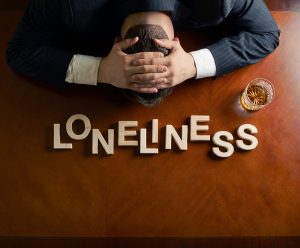 "Why practise I feel alone?"
Human being beings are instinctively social animals. Information technology is natural for us to feel alone or solitary when nosotros are isolated from others. As a tribal species, our brains adjusted to rely on social connections equally a means to survive. In fact, according to neuroscientist John Cacioppo, who has made a career out of studying loneliness, "The absence of social connection triggers the same, central warning bells as hunger, thirst and physical pain."
Put merely, "Humans don't practice well if they're alone."
However, modernistic life, with all of its conveniences, has led to a sharp increase in isolation. Equally a result, loneliness is on the ascension. According to Cacioppo, "The pct of Americans who responded that they regularly or oft felt lone was between eleven% and twenty% in the 1970s and 1980s… The American Association of Retired Persons(AARP) did a nationally representative report in 2010 and found it was closer to 40% to 45%."
When nosotros notice ourselves becoming isolated, nosotros should accept that as a warning sign that we may turning confronting ourselves in some bones way. The path of isolation leads to loneliness, despair, and even depression.
"I feel lonely? What'south wrong with me?"
When we feel alone, nosotros frequently tend to beat ourselves upward and recall that something is just wrong with u.s.. The more than alone we experience, the more than we start to have thoughts of not belonging or of feeling rejected by others. Left alone with our thoughts, we go our ain worst enemy. An isolated space is the perfect breeding ground for negative, cocky-critical thoughts. These thought patterns make upwardly the "critical inner voice (CIV)," an internalized enemy that leads tococky-subversive idea processes and behaviors. This inner critic feeds into our feelings of isolation, encouraging us to avert others and remain in a alone state.
Although our critical inner voices may tell us otherwise, in reality, there is nil inherently wrong with us that leads us to exist lonely. It is a common misconception that people are lone because they have poor social skills. In fact, new research shows that lonely people take perfectly adequate social skills and even out perform non-solitary individuals when it comes to reading social cues. However, when "social force per unit area" is introduced to social skills tests, lonely people oft begin to asphyxiate. They start to feel very anxious or fear failure. In essence, their self-limiting beliefs or disquisitional inner voices interfere with their natural social abilities.
Loneliness is not quantified by the amount of time nosotros spend solitary, simply rather by how nosotros feel about the time we spend lone. Cacioppo defines loneliness, every bit "perceived social isolation, or the discrepancy betwixt what you want from your social relationships and your perception of those relationships." Feeling lone can trigger thoughts that we are unloved or unlikeable. Your critical inner phonation will come with a nasty list of reasons that you lot are lonely, viciously attacking you and the people around you. For example, you may set on yourself for being "bad-mannered" or "creepy" and and so human action tranquility in a group of people. Later on, you may then attack yourself for not talking enough. These thoughts reflect a hostile and unfriendly point of view toward yourself. Treat these thoughts like they were coming from an external enemy, and do not tolerate them.
"What causes loneliness?"
There are several factors that lead individuals to feel alone. The main causes of loneliness being:
- Heredity – Co-ordinate to John Cacioppo, "Loneliness is nigh l% heritable, only this does not mean loneliness is determined by genes. What appears to be heritable is the intensity of pain felt when one feels socially isolated." Depending on their genes, some people are more likely to feel more pain or perceive themselves every bit more alone when they are out of touch from others.
- Environment– Loneliness is often triggered by one's environment. If one lives in an isolated area or has recently moved to a new location, they are more susceptible to loneliness. Furthermore, moving to a new land or studying abroad, where language or cultural barriers can complicate social interactions can likewise lead people to feel more alone.
- Circumstances – Painful life circumstances, such as divorce or loss, tin can increase feelings of loneliness.
- Thoughts & Attitudes – The manner we call back and feel about ourselves and the world around us can also trigger loneliness.
There are other psychological and developmental factors that tin lead to feeling lone. Severely solitary individuals often report:
- History of abuse
- Hostile/intrusive or withdrawn/misattuned parents
- Disorganized or broken-hearted ambivalent zipper style and problems with advice
- Internalization of parent/ attachment figures
- Feelings of hostility or helplessness

"Is loneliness serious?"
Although, temporary times of loneliness are mutual and can pass rapidly, loneliness tin be a chronic condition with serious, harmful furnishings on both one's concrete and mental health. The effects of long-term loneliness on psychical health include, diminished sleep quality, weakened health, and fifty-fifty increased mortality. While the effects on one'due south mental health include depression, timidity, misremembering, and focus on exclusion rather than inclusion (which perpetuates the critical inner vocalisation).
Studies are now showing that a lone encephalon is structurally and biochemically unlike. The neural response to positive events and images get suppressed, so the world is perceived through a negative filter. When nosotros are lonely, nosotros are more than likely to see things every bit hopeless. Nosotros may feel that the world around us is threatening or beyond our control. This makes it difficult to summon up the energy and courage to find happiness and change.


Length: 90 Minutes
Price: $fifteen
On-Demand Webinars
In this Webinar: Acquire virtually the psychological roots of loneliness. Overcome the disquisitional inner voice that perpetuates feelings of isolation. Challenge the psychological…
"How can I finish feeling and so solitary?"
Loneliness is not a helpless condition. At that place are deportment you can take to combat feeling alone and brainstorm to have more than meaningful, social connections in your life.
Challenge Your Inner Critic
In their inquiry, male parent and daughter psychologists Drs. Robert and Lisa Firestone found that the virtually mutual negative thought people have toward themselves is that they are "dissimilar from other people." These self-limiting beliefs tin can proceed you stuck in a cycle of loneliness. Your critical inner voices endeavour to keep you lot from challenging yourself to step outside your comfort zone, then stab you in the back for avoiding taking action. When you hear these self-attacks, it is vital that you do not let them to manipulate your behavior. Acknowledge your feelings of loneliness and isolation without judgment, saying to yourself "I feel lonely right at present, merely I am not going to give in to my critical inner voice and vanquish myself up about information technology." Instead, you lot tin larn to challenge your inner critic.
Learn how to Overcome Your Inner Critic in this online course.
Practice Self-Compassion
Self-compassion is the radical act of treating yourself with the aforementioned kindness that you would treat a friend. Researcher Dr. Kristen Neff has found that self-compassion leads to "greater emotional resilience, more accurate cocky-concepts, [and] more caring relationship beliefs." Co-ordinate to Dr. Neff, self-compassion involves 3 main elements. Allow's break these elements downwardly in relation to combatting loneliness:
Self-kindness Vs. Self-judgment – "Self-compassion entails being warm and understanding toward ourselves when nosotros endure, neglect, or feel inadequate, rather than ignoring our hurting or flagellating ourselves with self-criticism," Dr. Neff says. When we feel isolated or lone, we can cull to have compassion for ourselves. We can recognize our emotions without judging them, perhaps saying to ourselves, "I'm really pain correct now." Denying the reality of our pain only leads to more than suffering and frustration. "When this reality is accepted with sympathy and kindness," says Dr. Neff, "Greater emotional equanimity is experienced." When we accept where we are at and what we are struggling against, without berating ourselves, we tin can then begin to change.
Mindfulness Vs. Over-identification with thoughts – According to Dr. Neff, "Self-pity also requires taking a balanced approach to our negative emotions and then that feelings are neither suppressed nor exaggerated." Y'all can observe your negative thoughts without accepting them every bit truth or allowing them to dictate your actions. Mindfulness teaches u.s. not to over-identify "with thoughts feelings , so that nosotros are caught up and swept away past negative reactivity." If you are feeling lonely, be wary of labels; yous are not "alone," a "loser," a "recluse," "bad at making friends," etc. Encompass the non-judgemental nature of mindfulness.
Mutual humanity Vs. Isolation– Even when you are feeling isolated from others, y'all tin can brainstorm to recognize your common humanity. ALL humans suffer. ALL humans are wired for social connection and will feel pain when they feel emotionally isolated from others. "The very definition of being "homo" ways that one is mortal, vulnerable and imperfect," says Dr. Neff, "Therefore, self-compassion involves recognizing that suffering and personal inadequacy is office of the shared human being experience – something that we all go through rather than being something that happens to 'me' solitary." Fifty-fifty though you are feeling lonely, it is of import to recognize that you are not alone in this pain. Simply look at the comment section below. The globe is full of solitary people.
Read well-nigh The Many Benefits of Self-Compassion
Have Steps to Interruption Free From Isolation
Come up with a plan and begin to accept steps to pause costless from isolation. Ask yourself the following questions:
When exercise I feel the most lonely?
When do I feel the to the lowest degree alone?
What activities do I most enjoy?
Is in that location anyone I feel skillful spending fourth dimension with? List their names.
Now think about some concrete ways to address your answers to those questions:
How can you lot feel less alone at those solitary times? Can you lot attain out to a friend? Join an online chat community? Observe a healthy mode to distract yourself from the loneliness, like exercise, meditation, or fifty-fifty temporarily playing a distracting video game?
Why exercise you think you feel less alone at certain times? How can y'all expand on those positive times? For example, if you feel practiced at work, perhaps y'all could spend more time with your coworkers or find hobbies similar volunteering that build on similar skills yous relish sharing at work.
Are the activities you savor social? If and then, how can you lot participate in these activities more than? If the activities are isolated, how can you connect with others who relish these activities? The Internet is an incredible resource for building customs with people around the world who share your interests. People who use the Cyberspace to actually connect with others are less probable to feel lonely.
If at that place are friends, coworkers, or family members that you feel good being around, make plans to spend more fourth dimension with them. Retrieve of activities y'all could do together or things yous could share on a more regular footing.
Because our brains practise not respond positively to seclusion, identify yourself in social settings, even if yous are among strangers. If you experience shy in public, try going online. Interacting on the Internet may exist a expert first footstep in giving you the confidence to express yourself. Fight hard against the critical inner voices that effort to talk you into isolating yourself.
Practice Generosity
One of the best actions we can accept to counteract the hopelessness we may feel is to recollect outside of ourselves. Generosity is a natural repellant confronting self-hatred. Believe beyond all doubt that you have something to offering! Volunteering is a great exercise in thinking outside yourself and oft gives you lot the opportunity to connect with new people. Fifty-fifty little acts of generosity can have a pregnant touch. Generosity, as a principle, can atomic number 82 to stronger self-esteem, which and then leads to more social behavior.
To learn more about where loneliness comes from and how y'all tin can combat it, watch our Webinar on A Way Out of Loneliness
If you are feeling isolated and may be experiencing symptoms of depression, here are some helpful resources:
National Institute of Mental Health – Depression
Depression.com
WebMD – Depression
Helpguide.org – Depression
Depression-Screening.org
Become Aid: IF YOU OR SOMEONE Yous KNOW IS IN CRISIS OR IN Need OF Immediate Aid, Telephone call1-800-273-TALK(8255).
This is a free hotline available 24 hours a day to anyone in emotional distress or suicidal crunch.
International readers can click hither for a list of helplines and crisis centers around the earth.
Virtually the Author

Tags: lonely, depression, isolated, isolation, loneliness, lonely, loss, sad
Source: https://www.psychalive.org/isolation-and-loneliness/
0 Response to "Read This When You're Feeling Lonely Letter Idea"
Post a Comment